

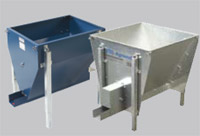
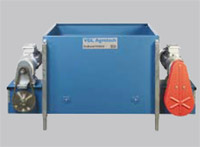
Feedhopper SHT-1D
- Capacity 100 litres
- Equipped with a feed return wheel
which prevents spillage of feed
- SHT-ID can be used both suspended and supported
Feedhopper DHT-1
- Complete knock down (CKD)
- Optionally supplied with either harmonica-bag extension
for suspended system or with metal extension for
supported system
- Both extensions increase capacity of the hopper
up to 300 litre(s)
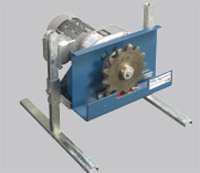
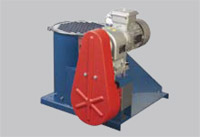
Independent direct drive
- Direct drive can be placed at nearly any location
of the feeding circuit
- Equipped with a shear pin protection system
- Available in different capacities and speed(s) from
12 up to 36 mtr/min
- Suitable for use in suspended and supported systems
Chicken Flipper
- Can be used for Normal as well in Medium feedtrough
- Prevents birds from getting stuck in the corners and drive units
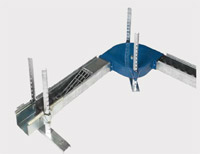
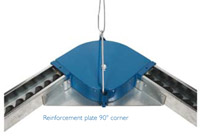
Reinforcement plate
- Recommended for 90˚corners in a suspended circuit
- Provides better support to corners and feedtroughs
- Minimizes wear of corners and feedtroughs
Feedhopper
- Available in various models
- Number of circuits varies from 1 to 4
- Standard feedhopper has a capacity of 220 up to 390 litres
- A feed extension part increases
the capacity of a feedhopper by 287 litres
- Equipped with a shear pin protection system, agitator
and drive set
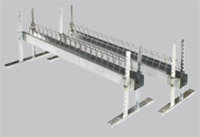
Feedtrough with male excluder grill
- Normal and Medium feedtroughs
- Both types of feedtrough are made of 1,25 mm
thick galvanised sendzimir sheet metal
- The grill is made of 4 mm galvanised wire
Cornerfeedhopper
- Perfect solution for chain feeding in small poultry houses
or for automatic chain feeding on layer cage systems
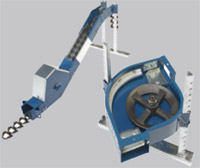
Corners
- Available in 90˚ and 135˚
- Epoxy powder coated
- Hardened steel bottom plate
- Cast iron corner wheel with a self lubricating
bronze bearing which eliminates the need of lubrication
- Suspended corner recommended to be combined
with reinforcement plate
- Rising and descending corners available to overcome
level differences